Field Guide · Grades
Ceremonial vs culinary matcha:
what's the difference?
The two grades share a name and a color, and almost nothing else. Here's how to tell them apart and pick the right one.
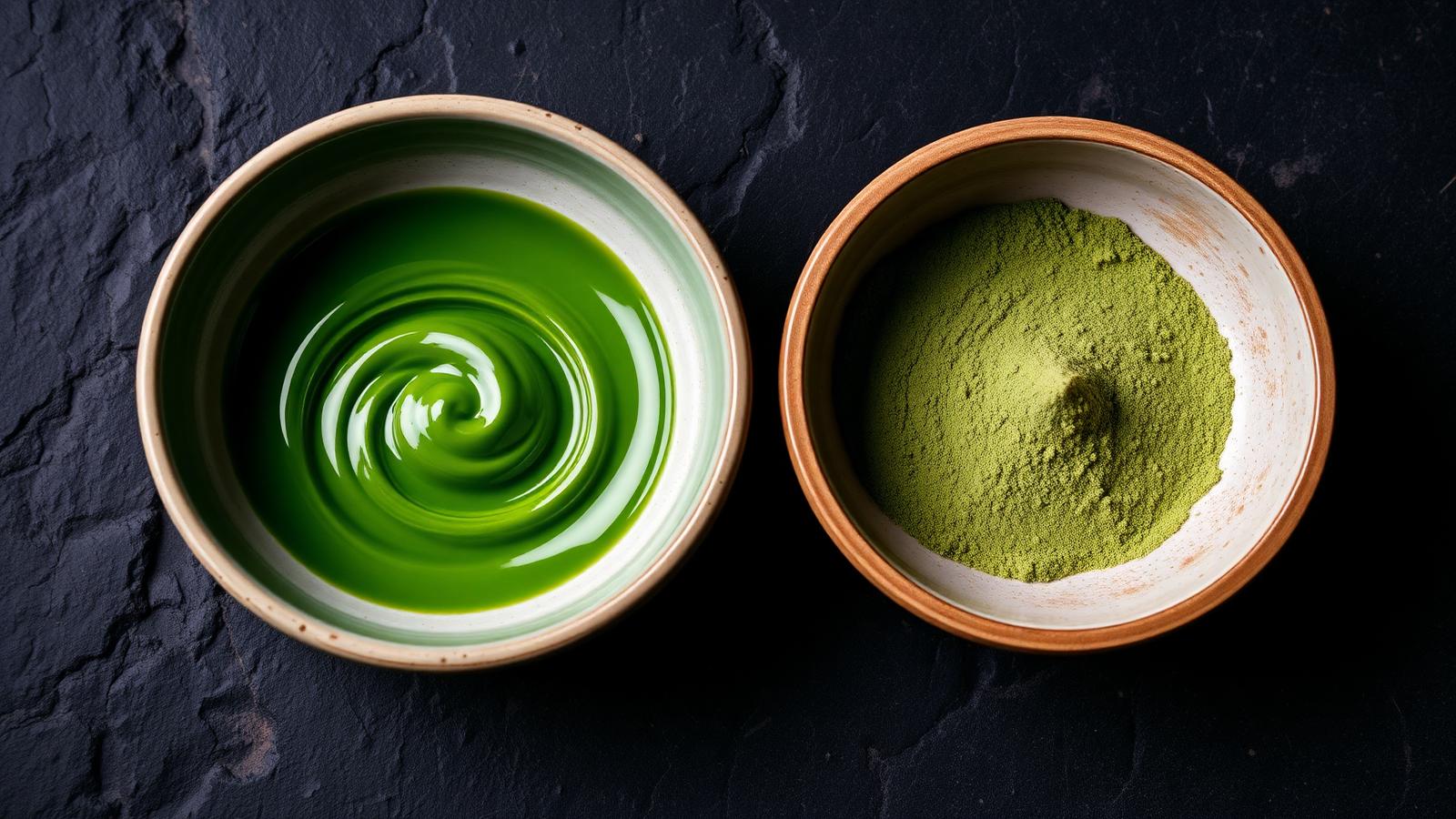
Every matcha buyer eventually hits the same fork in the aisle: a $12 pouch labeled "matcha" next to a $40 tin labeled "ceremonial matcha," both bright green, both from Japan. They aren't the same product. The grade is a shorthand for the leaf, the harvest, and the intended use — and the wrong grade in the wrong drink is why so many people quietly decide they "don't like matcha."
What each grade actually means
Ceremonial-grade matcha is made from the youngest, shade-grown first-harvest (ichibancha) leaves. It's stone-milled slowly from tencha — the deveined, un-rolled leaf — and priced to be drunk on its own, whisked into water. It's what you'd be served at a Japanese tea ceremony, hence the name.
Culinary-grade is a working category. It typically comes from later harvests (nibancha, sanbancha), may use leaves grown under less shade, and is formulated to hold its color and flavor against sugar, dairy, and heat. It's the correct choice for baked goods, sweetened lattes, ice cream, and anywhere the matcha has to fight for attention.
There is no legal definition of either term in Japan or the U.S. — they're conventions that reputable producers respect and that supermarket brands frequently abuse. The way to cut through the labels is to look at the leaf.
Leaf and harvest
The single biggest input is when the leaf was picked. First-harvest leaves have spent the winter concentrating amino acids, most notably L-theanine, which is what gives ceremonial matcha its sweetness and umami weight. Second and third harvests, picked later in the summer, have more sunlight in them and more catechins — the compounds responsible for astringency and bitterness.
Ceremonial-grade matcha is ichibancha, full stop. Culinary is typically nibancha or a blend. A brand that doesn't tell you which harvest their matcha came from is either second-harvest by default or blending across the year to hit a price point.
Color and taste
Poured out of the tin, a real ceremonial matcha is vivid, almost-fluorescent jade — the kind of green that looks slightly unnatural next to anything else on the counter. Culinary-grade skews yellowish, olive, or dull green; some large-brand "ceremonial" powders do too, and that's a tell.
In the bowl, at the correct water temperature, ceremonial-grade is sweet, vegetal, and long, with a foam that holds. Culinary is astringent and grassy on its own — designed to survive being overpowered, not to shine solo. Neither is "better" in the abstract; they're built for different jobs.
Price and value
Good ceremonial matcha usually lands somewhere between $1.50 and $3.50 per gram at retail; single-lot and heirloom-cultivar matcha pushes higher. Culinary-grade is typically $0.25–$0.75 per gram. Real ceremonial matcha below a dollar a gram almost always means blended, older, or later-harvest leaf hiding behind the label.
The math that actually matters is per-cup, not per-gram. A 30 g tin of ceremonial matcha is roughly fifteen bowls. At $40 that's about $2.60 a bowl — cheaper than a specialty coffee, from tea that took a year to grow and three weeks to mill.
Best uses, matched to grade
- Whisked bowl (usucha/koicha): ceremonial-grade only. Culinary in a bowl is a bad first date with matcha.
- Unsweetened matcha latte: ceremonial. The dairy rounds the matcha off — you still want the good stuff.
- Sweet café-style latte, iced drinks: culinary is fine and often better; the sugar swallows ceremonial nuance anyway.
- Baking, ice cream, macarons, mochi: culinary. Higher heat and sugar destroy ceremonial character.
How to tell quality at a glance
A trustworthy ceremonial matcha names its prefecture (Kagoshima, Kyoto, Aichi) and often its region within that prefecture (Kirishima, Uji, Nishio). It lists a harvest year and, ideally, a mill date. It comes in an opaque, sealed tin, not a clear bag. And the powder is fine enough that it sifts through the mesh without clumping — a sign of slow stone-milling rather than a fast ball-mill.
For the deeper why-Kagoshima story, read Kagoshima matcha and volcanic-soil terroir. For the mechanics of actually whisking a bowl once you've bought the right grade, read how to make matcha. And for the full context on the plant, the process, and the growing regions, the pillar is the complete matcha guide.
The short version
Ceremonial for drinking. Culinary for cooking. If a bowl of matcha has ever tasted bitter, chalky, or aggressively grassy to you, the odds are strong the grade was wrong for the job — not the tea itself.
Ready to try a real ceremonial-grade tin? Reserve an organic Kirishima 30 g tin — no charge today.